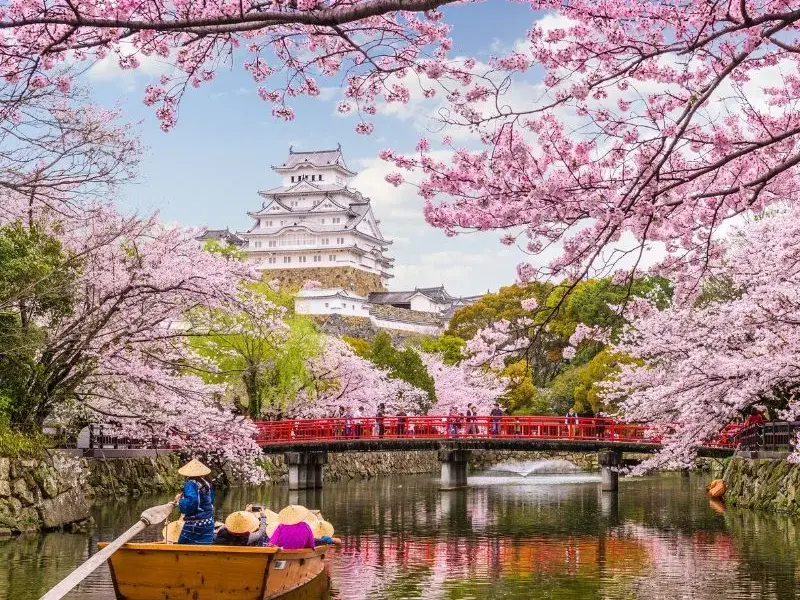
Everyone wants Japan "for the cherry blossoms" and almost everyone books the wrong week. The bloom is a moving front, not a fixed date, Tokyo peaks in very late March most years, Kyoto a few days behind. Fixed-departure tours that lock a mid-April date routinely arrive to green trees. We track the forecast and run our departures in the honest window, late March to mid April, and we route south-to-north within the trip so if the front runs early or late, at least one city catches it.
The other thing we do differently is refuse the bus. Japan is a country built around trains, and an escorted trip hauling luggage onto a coach misses the point entirely. We ride the Shinkansen with pre-booked reserved seats, forward luggage separately hotel to hotel, a completely ordinary Japanese habit that transforms the trip, and walk into Kyoto's temples at opening time, before the tour buses arrive at ten. Evenings are structured lightly: one guided food street walk in Osaka, one geisha-district evening stroll in Gion, and the rest genuinely free, because Japan rewards wandering.
A word on paperwork: Japan requires a visa for Indian passport holders, and processing takes time in peak season. We handle the documentation checklist with you but you must apply six to eight weeks out, this is the one trip on our list where a late booking can genuinely fail on the visa alone. If April is impossible, our November departure trades blossom for maple foliage in Kyoto, which many of our returning travellers quietly prefer.
Nine days, start to finish. The route, then the rhythm of it.
Days 1–3Tokyoshrines, crossing, blossom viewing
Day 4Hakoneropeway, onsen night
Days 5–6Kyototemples at opening time
Days 7–9Osakafood streets, departure
- Day 1
Arrive Tokyo, airport transfer, easy evening walk in Shinjuku for lights and a first bowl of ramen. Nothing scheduled early; jet lag is real.
- Day 2
Tokyo, Meiji Shrine at opening, Harajuku and Omotesando on foot, afternoon in Asakusa and the Senso-ji lanes, blossom viewing at Ueno or Chidorigafuchi depending on the bloom front.
- Day 3
Tokyo, teamLab or the Ghibli Museum (booked months ahead), Shibuya crossing at dusk, free evening.
- Day 4
Rail to Hakone. Ropeway over Owakudani's sulphur vents, lake cruise, Mt Fuji views weather permitting, we tell you honestly that Fuji shows itself about half the time. Onsen evening at the hotel.
- Day 5
Shinkansen to Kyoto. Afternoon at Kiyomizu-dera and the Higashiyama lanes; evening walk through Gion at lantern-lighting time.
- Day 6
Kyoto, Fushimi Inari's torii gates at 7 a.m. before the crowds, Arashiyama bamboo grove and the river, Kinkaku-ji golden pavilion late afternoon.
- Day 7
Kyoto to Osaka (15 minutes by rail). Osaka Castle in blossom, then a guided evening eating walk through Dotonbori, takoyaki, kushikatsu, and the reasoning behind each stall we pick.
- Day 8
Free morning in Osaka, Kuromon market or last shopping. Farewell dinner.
- Day 9
Transfer to Kansai airport, depart.
The facts most itineraries leave out. We print them because they are what decides whether this trip suits you.
Where you stay
City hotels in Tokyo, Kyoto and Osaka chosen for location over lobby size, you can walk to a station and a convenience store from every one of them, which in Japan matters more than an extra star. In Hakone we use a ryokan-style property with onsen baths, because one night sleeping on tatami and eating a kaiseki dinner is worth more than any city hotel.
Who it’s for
Couples, friends and families with teenagers who will walk, this is a trip done substantially on foot and by train, with luggage handled but daily walking of 6–10 km. It suits first-time visitors to Japan who want it done in the right order. Not for travellers who need a private car at the door, and not for those who cannot commit to the visa timeline; and small children will find the pace tiring.