Ranthambore & the Wild East of Rajasthan
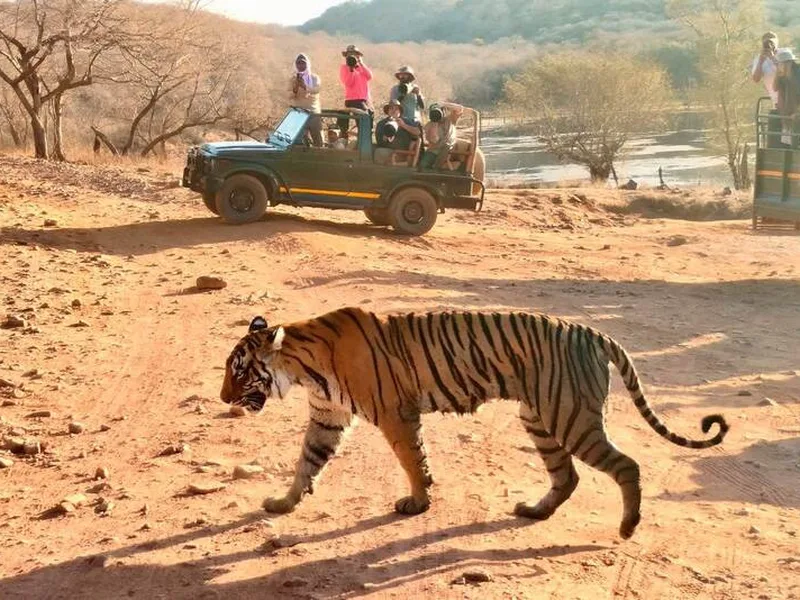
Four nights at Ranthambore with three properly booked safaris in the October–April season, plus an unhurried Jaipur day on the way in, tigers first, forts second.
Seven nights built around the July–August monsoon bloom, trekking into the Valley of Flowers at its absolute peak and up to Hemkund Sahib at 4,300 metres, with the rest days most operators skip.
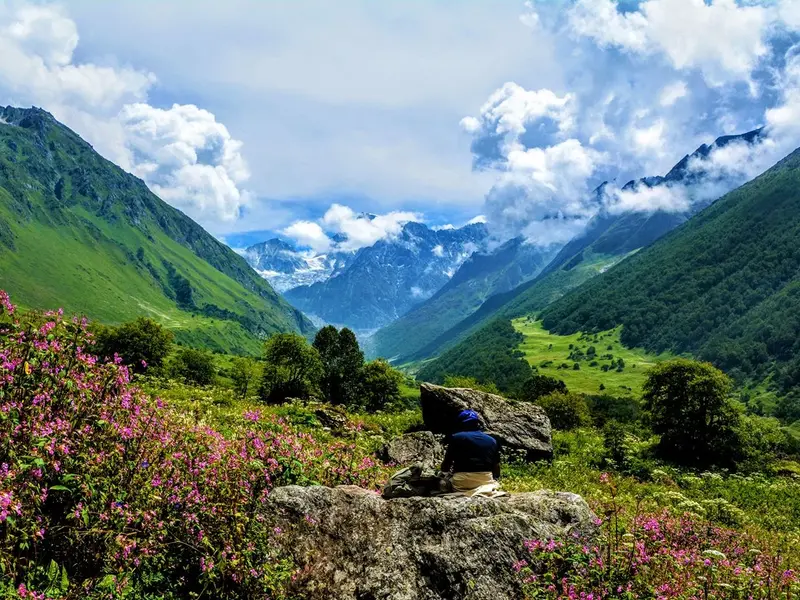
Here is the uncomfortable truth about the Valley of Flowers: it is only worth the effort in the monsoon. The bloom peaks mid-July to mid-August, exactly when the roads are at their worst and the fair-weather operators have gone home. Everyone who visits in "safe" September finds a green valley and wonders what the fuss was. The fuss is a six-week window of several hundred alpine species flowering at once, and you have to accept some rain to see it.
We accept the rain and plan around it. A buffer day at Ghangaria, starts at first light before the afternoon weather builds, and a hard rule that everyone moves at the pace of the slowest walker, because staying together beats moving fast and ending up strung out over four kilometres of wet stone. The Hemkund day is the honest test: 1,100 metres of climbing to a glacial lake and gurudwara at 4,329 metres. We brief it plainly the night before, and sitting it out at Ghangaria is a respected choice, not a failure.
This is a trip for friends who train together and trekkers ticking off a long-held ambition. The proof point is simple: the moment the valley opens out past the first ridge and the flowers run unbroken to the glacier line, every soaked boot is forgotten.
Eight days, start to finish. The route, then the rhythm of it.
Arrive Rishikesh; gear check and route briefing over dinner. Easy on purpose.
Drive to Joshimath (9–10 hours along the Alaknanda); early night.
Drive to Pulna, trek 9 km to Ghangaria (3,050 m), a steady day on a good trail with tea stops.
Valley of Flowers, first-light start, 4 km in to the valley floor, the full day among the bloom, back by mid-afternoon.
Hemkund Sahib, the hard day. 6 km and 1,100 m up to the lake and gurudwara, langar at the top, careful descent.
Buffer day, a second valley entry if the weather stole day 4, else rest at Ghangaria; afternoon trek out to Pulna, drive to Joshimath.
Drive down to Rishikesh (9–10 hours); farewell dinner by the Ganga, legs grateful for level ground.
Depart from Dehradun or Haridwar.
The facts most itineraries leave out. We print them because they are what decides whether this trip suits you.
Hotels in Rishikesh and Joshimath, and at Ghangaria the best of a simple lot, a trekking village at 3,000 metres offers guesthouses, not hotels, and we use the ones whose blankets are thick and whose kitchens are fast. Three nights of basic is the honest price of the bloom.
Trekkers and fit parties of friends who can walk 10–12 km on steep, wet ground for three consecutive days, and who understand that monsoon means rain, and rain means the flowers. Not for children, not for travellers with knee or cardiac conditions, and not for anyone who needs a dry guarantee. September visitors should book a different trip; this one exists for the bloom.
Journeys that suit the same travellers.

Four nights at Ranthambore with three properly booked safaris in the October–April season, plus an unhurried Jaipur day on the way in, tigers first, forts second.

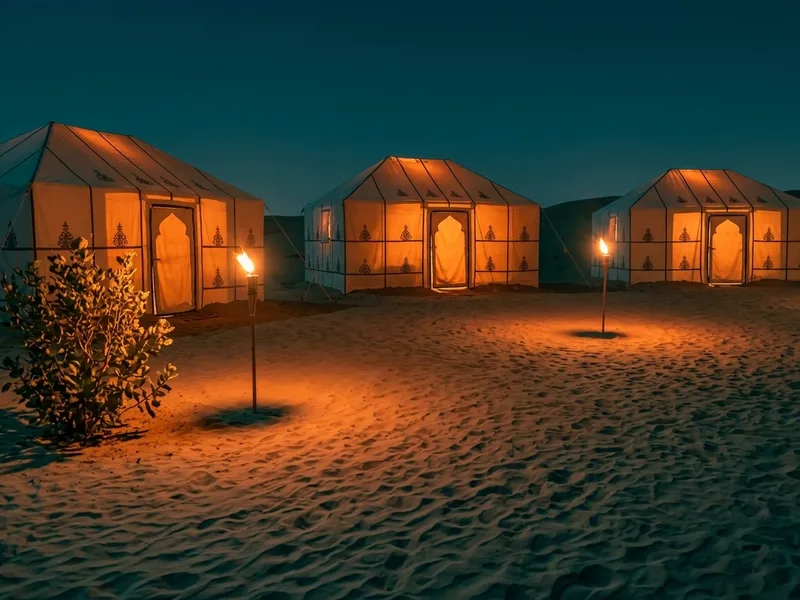
Four nights split between Jaisalmer's golden city and a luxury desert camp deep in the Thar, proper beds under canvas, dune sunsets without the day-tripper circus, November to February only.

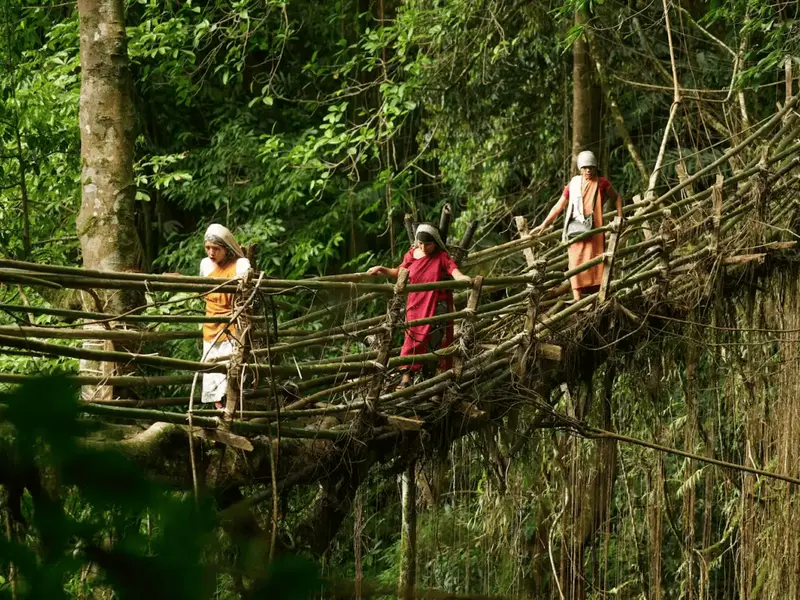
Six nights through Shillong, Cherrapunji, Mawlynnong and the crystal water at Dawki, including the descent to a living root bridge that is the whole point, in the clear October–April season.