The Golden Triangle: Delhi, Agra & Jaipur
Five nights across Delhi, Agra and Jaipur in the cool months, built around one thing most tours fumble: standing in front of the Taj Mahal at sunrise, before the day arrives.
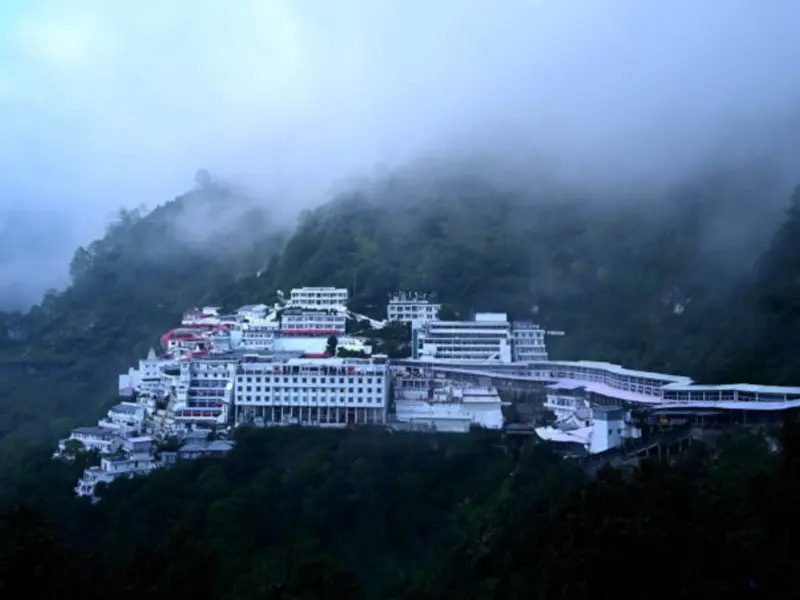
Three nights built around the 13-kilometre climb from Katra to the Vaishno Devi shrine, with every honest way up, foot, pony, palanquin or helicopter, named and arranged in advance.
The first thing to say about Vaishno Devi is the thing most packages bury in the fine print: it is a 13-kilometre uphill walk each way, and no vehicle goes to the shrine. The track is paved, lit through the night and lined with tea stalls, and lakhs of ordinary people of every age complete it every month. But it is a climb, five to seven hours up for most, and pretending otherwise is how families end up exhausted and short-tempered at the Bhawan. We would rather you choose your way up with clear eyes.
So we put all the options on the table before you leave home. Walk it, which is the classic yatra and the one pilgrims speak of for the rest of their lives. Take a pony or a palanquin for part or all of the route, arranged at fixed rates so nobody is negotiating mid-mountain. Or take the helicopter from Katra to Sanjichhat, six minutes in the air and a 2.5-kilometre walk remaining, booked well in advance because seats vanish, and weather can ground it, in which case the ponies are the fallback and we say so now. Our escort manages the yatra registration, the timings and the regrouping, so the family that walks and the grandmother who flies meet at the Bhawan for darshan together.
This lands hardest for multi-generational families making the yatra as one unit, precisely because the mixed modes let everyone come. It runs year-round; we avoid the peak monsoon weeks when the track is at its slipperiest, and Navratri is magnificent but very crowded, which is a choice you should make knowingly.
Four days, start to finish. The route, then the rhythm of it.
Arrive Jammu, drive to Katra (about 2 hours), yatra registration sorted, darshan of the Bhumika Temple, carb-heavy dinner and an early night.
Begin the climb at dawn, by foot, pony or helicopter as chosen, darshan at the Holy Cave shrine, optional onward visit to the Bhairon temple by track or ropeway, descend by evening or night-halt near the Bhawan depending on pace.
Unhurried recovery morning in Katra, afternoon visit to the nine-shrine Nau Devi cave temple nearby, evening aarti and market walk in Katra.
Drive back to Jammu, with a stop at the Raghunath Temple if time allows, onward trains and flights.
The facts most itineraries leave out. We print them because they are what decides whether this trip suits your family.
A clean, dependable hotel in Katra a short walk from the yatra starting point at Banganga, with early breakfasts, hot water that works at 4 am and staff who have seen ten thousand pilgrims leave before dawn. Simple and right for the purpose; we have used it for years.
Pilgrims, and especially multi-generational families who want to make the yatra together without one member's knees deciding for everyone. The walking option is honestly Moderate and we grade it so. Not for travellers seeking comfort touring, and not for anyone unwilling to plan the ascent honestly; the mountain rewards preparation and punishes bravado.
Journeys that suit the same travellers.

Five nights across Delhi, Agra and Jaipur in the cool months, built around one thing most tours fumble: standing in front of the Taj Mahal at sunrise, before the day arrives.

Four nights on one good island, doing very little, extremely well: the honeymoon trip for couples who understand that the Maldives is not a sightseeing destination.

Six nights split between Phuket and Krabi with the islands done by early boat, Phang Nga Bay before the flotillas arrive, and afternoons left honestly free.